As I began my journey into the world of indoor plants, I spent a lot of time investigating plant physiology and exploring the best ways to help people. Through my research and the studies I’ve followed, I’ve learned that the secret to success isn’t a magical gift; it’s simply understanding the biological language of your leafy friends. This beginner guide for indoor plant care is designed to help you decode that language so you can build a sustainable indoor forest that doesn’t just survive but truly thrives.
I’ve noticed that most new plant parents dive in with plenty of love but very little technical strategy. While love is great, plants have specific metabolic needs—oxygen, water, and carbohydrates—that must be met with precision. Whether you are gardening in a tiny apartment or a spacious home, this beginner guide for house plants will walk you through the essential steps of lighting, watering, and soil management to ensure your plants become long-term members of your family.
Decoding the Light: Finding Your Plant’s “Happy Place”
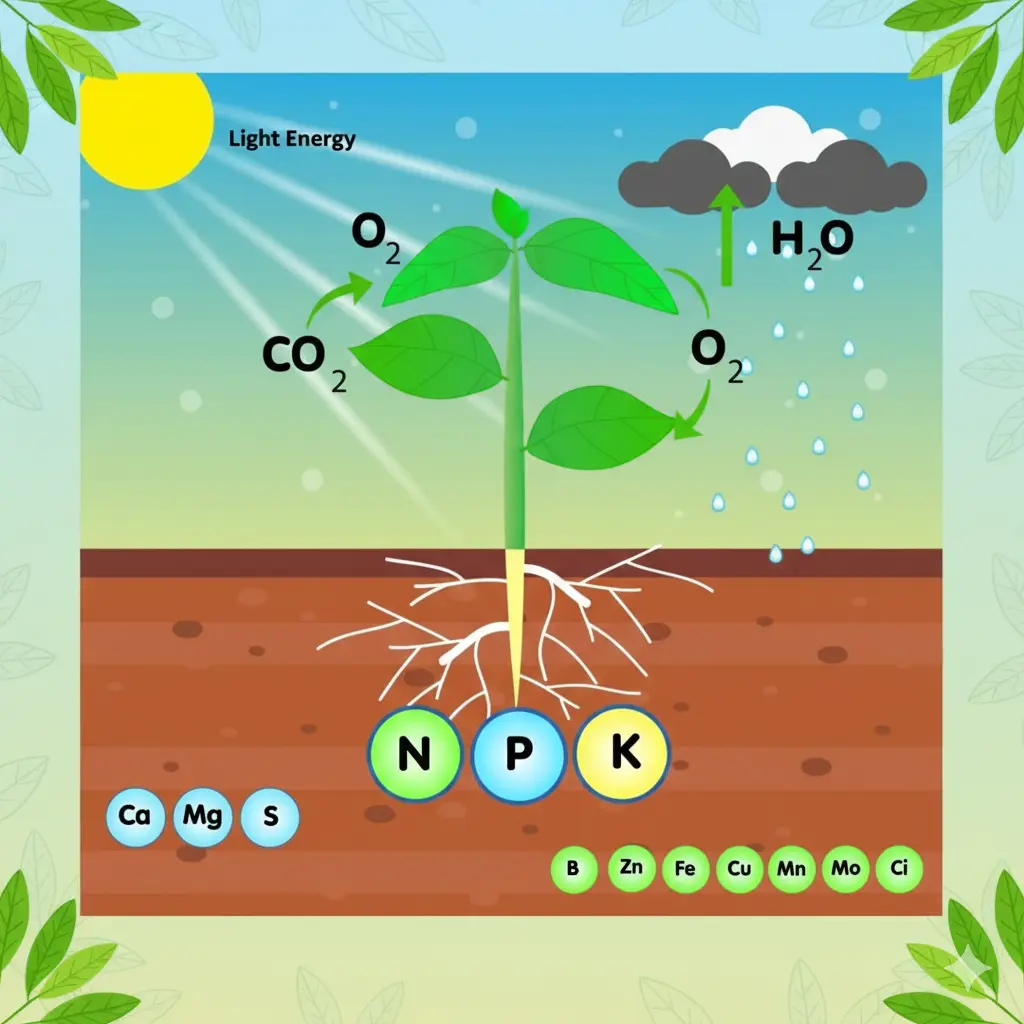
In my experience, the most common mistake beginners make is placing a plant where it looks good rather than where the light is functional for its specific needs. Light is the “lifeblood” of your plant, used during photosynthesis to combine carbon dioxide and water into the sugars that fuel growth.
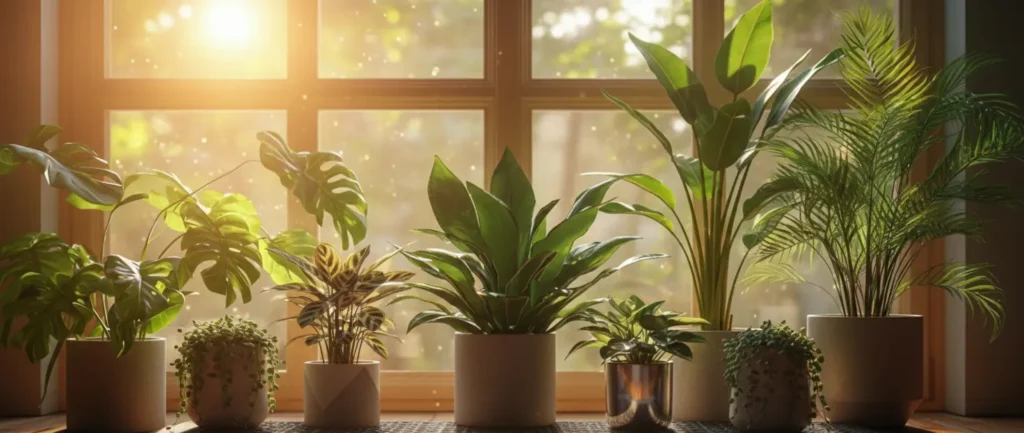
Providing your indoor plants with the right amount of natural light is the first step to thriving greenery
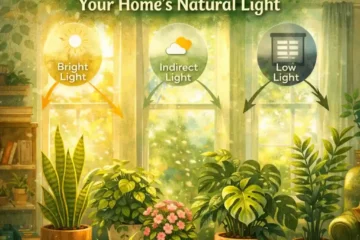
Not all light is equal, and your windows determine your success:
• North-Facing Windows: These provide the lowest light. If your home only has North windows, look for low-light champions like the Snake Plant (Sansevieria) or the ZZ Plant.
• East-Facing Windows: You get the “cool sun” of the morning here, which is perfect for a wide range of tropicals.
• West-Facing Windows: This provides “hot sun” in the afternoon, which can be intense for some foliage.
• South-Facing Windows: This is your “high-intensity” zone, ideal for cacti, succulents, and Meyer Lemon trees.
Pro Tip from the Field: Use the “shadow test” to check your light levels at midday. A sharp, defined shadow indicates bright direct light, while a blurry shadow means medium light. No shadow? You’re in a low-light zone.
To learn more about plants’ light requierements, read our article ‘Lighting Requirements for Indoor Plant Care’
The Art of the “Sip”: Watering Secrets to Prevent Root Rot
According to horticultural studies, more plants perish from “too much love”—specifically overwatering—than from neglect. Overwatering is the #1 killer of houseplants because it replaces the essential air spaces in your soil with water, literally suffocating the roots and preventing them from “breathing” or respiring.
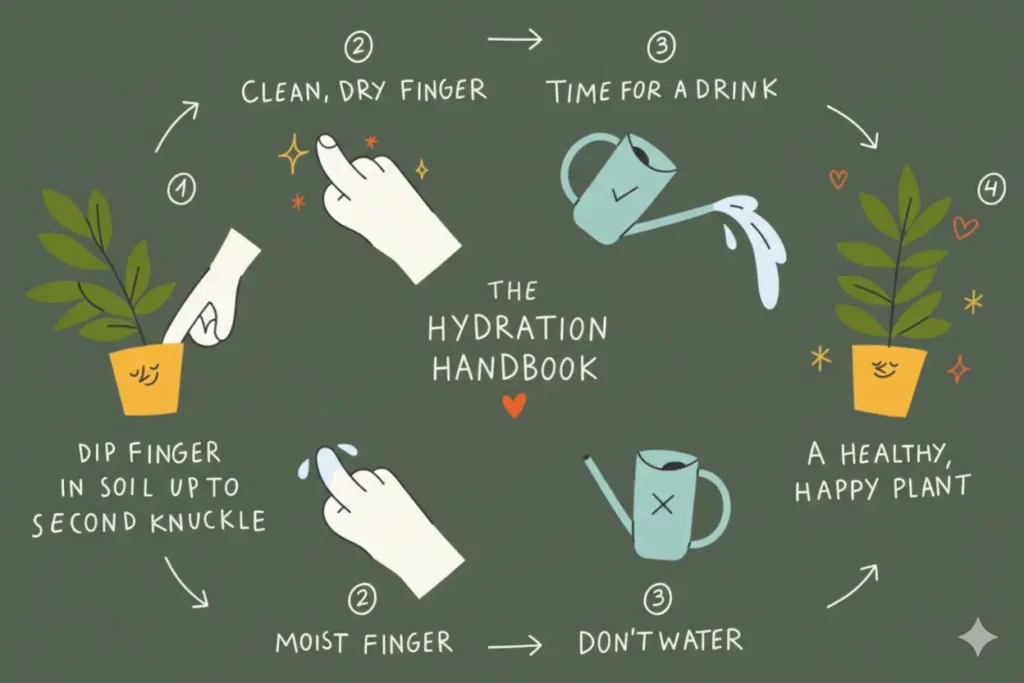
Instead of following a rigid schedule, I always recommend the “Finger Test”:
1. Stick your finger about 1 to 2 inches into the soil.
2. If the soil feels dry at that depth, it’s time to water.
3. If it’s still damp, wait a few days and check again.
Remember, plants need water to maintain turgor pressure, which keeps them upright. When they lose too much water through transpiration—vapor escaping from the leaves—they wilt. However, it is much easier for a plant to bounce back from being slightly underwatered than from the irreversible damage of root rot.
Soil and Pots: The Foundation of Health
Your plant’s container is its entire ecosystem, so choice of pot and soil is non-negotiable. Every beginner guide for indoor plants should emphasize this: Your pots MUST have drainage holes. Without them, excess water pools at the bottom, creating a swampy environment where anaerobic bacteria thrive and kill root systems.
When it comes to the “bedding,” here is a quick breakdown of what your plants want:
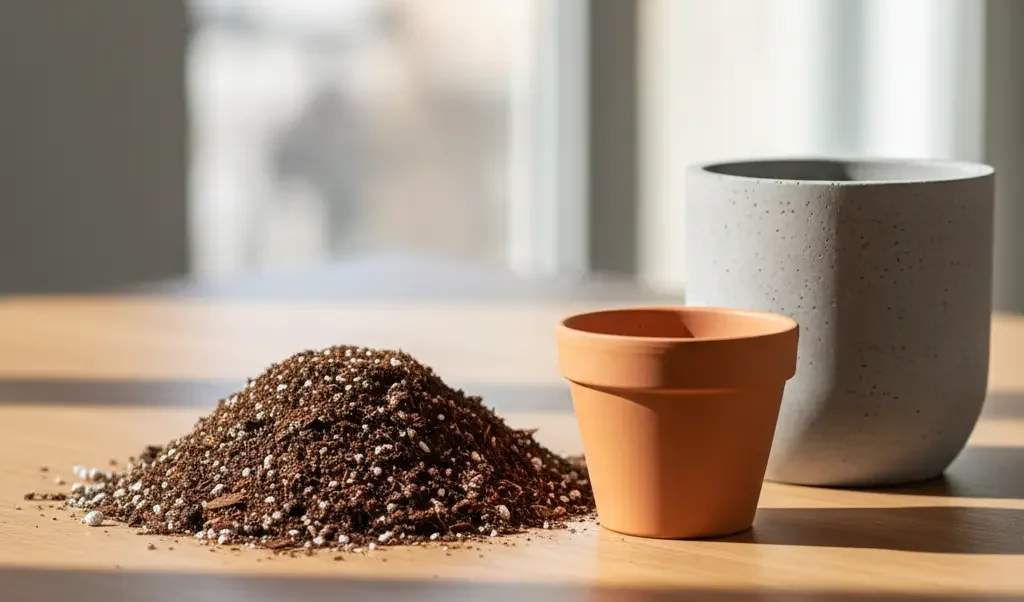
• The Mix: A standard tropical mix of 2 parts potting soil, 1 part perlite (for drainage), and 1 part coconut coir or peat moss (for moisture) works for most.
• Terra Cotta vs. Ceramic: Terra cotta is a porous clay that “wicks” moisture away, helping soil dry faster—great for plants like succulents that hate “wet feet”.
• Repotting: I’ve noticed plants usually need a new home every 12 to 18 months or when you see roots poking out of the drainage holes. When you do move up, only choose a pot 1 to 2 inches larger in diameter than the current one.
Essential Nutrition: Understanding N-P-K
Just like us, plants need vitamins! While soil provides some, a growing plant will eventually deplete its reserves. When you look at fertilizer, you’ll see three numbers, known as the N-P-K ratio:
• N (Nitrogen): Fuels leafy, green growth.
• P (Phosphorus): Encourages strong roots and flower/fruit production.
• K (Potassium): Essential for general well-being and the plant’s immune system.
In my researches, a balanced ratio (like 10-10-10) is a safe, effective choice for most beginners. Only fertilize during the “growing season” (spring and summer) and give your plants a break during the winter when their metabolism slows down.
Safe and Happy Homes: Pests and Pet Safety
A vital part of any beginner guide for indoor plants is safety. Did you know that roughly 90% of indoor plant species can be toxic if ingested?. If you have curious pets or toddlers, stick to safe options like Spider Plants, Areca Palms, or Peperomia.
Keep an eye out for “uninvited guests” like spider mites (look for fine webbing) or aphids. If you catch them early, you can often treat them naturally with neem oil or horticultural oil, which suffocates the pests without harsh chemicals.
Frequently Asked Questions
How often should I water my indoor plants?
There is no set schedule! The frequency depends on your home’s temperature and humidity. Use the finger test: water only when the top inch of soil feels dry.
Why are my plant’s leaves turning yellow?
Yellowing is a common “scream” for help. It often indicates overwatering, but it can also mean a nitrogen deficiency or that the plant is simply aging and dropping its oldest leaves.
Do indoor plants really clean the air?
Yes! Studies by NASA and others show that plants like the Snake Plant and Spider Plant can filter out pollutants and increase oxygen levels in your home.
Can I use tap water for all my plants?
Most plants are fine with tap water, but some “divas” like Calatheas are sensitive to salts and minerals, which can cause brown tips. If you see this, try using filtered or distilled water.
As you start this journey, remember that gardening is as much an art as it is a science. Don’t be discouraged by a few brown leaves; every expert started exactly where you are today. Happy planting🌱