It’s a scene every indoor gardener eventually faces: you’re checking on your greenery and notice a leaf has shifted from a vibrant emerald to a pale yellow, or a favorite tropical is showing crisp brown tips. While it might feel alarming, based on plant care studies, these changes aren’t usually a sign of immediate failure; in reality, your indoor plants are using their foliage to send a natural signal. Most of these shifts are simply “physiological disorders”—a term I’ve come across in my research that describes how a plant reacts when its metabolic balance is slightly off due to non-living factors like light, water, or nutrients. From what I’ve gathered through experience, a discolored leaf is often just an invitation to make a small, effective adjustment to your plant care routine.
In my research, I’ve found that leaves are actually great communicators that use their physical state to tell you about their internal health. A yellow leaf isn’t always a sign that the plant is dying; it’s a diagnostic tool.. This houseplant rescue guide is designed to help you decode these signals, understand how to start plant care at home correctly, and ensure your indoor forest remains healthy and vibrant.
Diagnosing Discolored Leaves and Signs of an Unhealthy Plant
To understand how to keep indoor plants alive, we must first identify the specific environmental or physiological stressor causing the change. Based on plant care studies, this is often a disruption of “homeostasis”—the balance a plant tries to maintain to function properly.
Understanding Overwatering and the Fear of Root Rot
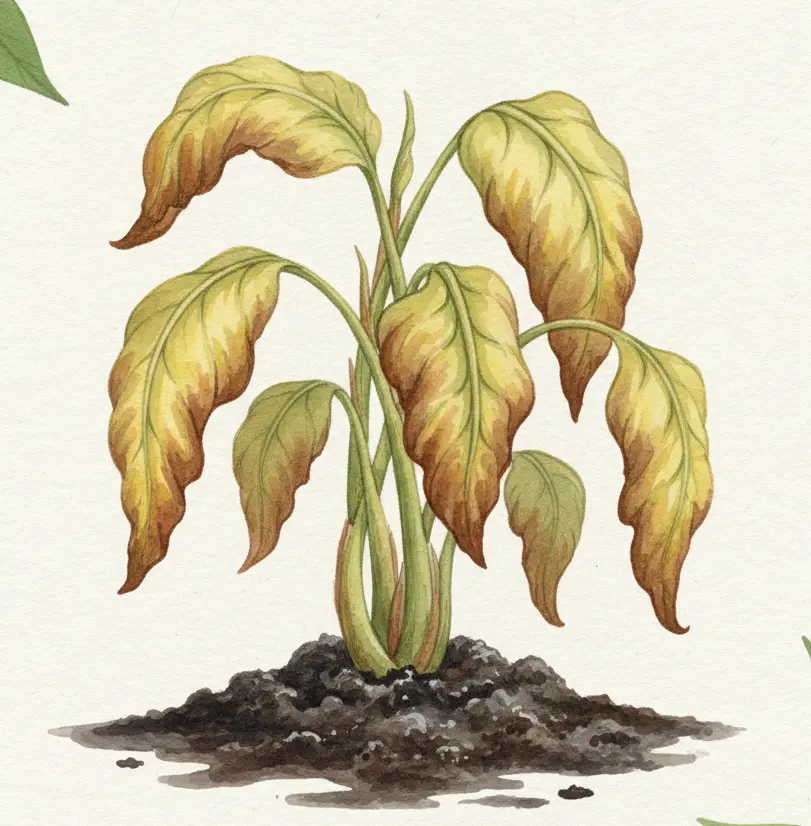
One of the most common indoor plant care mistakes is providing “too much love” through overwatering. In my research, I’ve found this is the leading cause of houseplant death. Plants “breathe” through their roots, and when soil is constantly soggy, the water displaces essential oxygen. This leads to indoor plant root rot, a condition where roots decay and can no longer transport water or nutrients to the rest of the plant.
Symptoms of Overwatering
You’ll often see yellow leaves that feel limp, mushy, or “soggy”. You might even notice mold or small mushrooms growing on the soil surface.
The Cure: The Finger Test
Before grabbing the watering can, stick your finger about one to two inches into the soil. If it feels dry at that depth, it’s time to water; if it’s still damp, wait a few days. Based on plant care studies, it is much easier for a plant to bounce back from being slightly underwatered than from the cellular damage caused by rot.
Identifying Underwatering and the Need for Better Hydration
While overwatering is common, sometimes we go too far the other way. From what I’ve gathered through experience, underwatered houseplant signs are usually quite distinct from overwatering.
Symptoms of Underwatering
Leaves will turn brown, becoming dry and “crinkly” or brittle to the touch. You may also see the plant drooping or wilting as it loses turgor pressure—the internal water pressure that keeps it standing upright.
Fixing the Issue
If the soil has become so dry that it pulls away from the sides of the pot, water may just run down the gaps without soaking in. In this case, you might need to use a “bottom watering” method or gently break up the top layer of soil to help it absorb moisture again.
Light Requirements for Indoor Plants: Too Much vs. Too Little
Light is the “food” that fuels photosynthesis, the process plants use to make energy. However, an imbalance can cause visible damage.
Too Much Light (Sunburn)
Many tropical plants are “understory” species, meaning they evolved in the shade of larger trees. If placed in intense, direct sun (like a South-facing window), the leaves can actually burn, showing bleached patches or brown tips.
Too Little Light (Etiolation)
If a plant is “starving” for light, it may stop producing chlorophyll, leading to a general yellowing known as chlorosis. You’ll also see etiolation, where the plant grows weak, spindly, and “leggy” as it stretches toward the nearest light source.
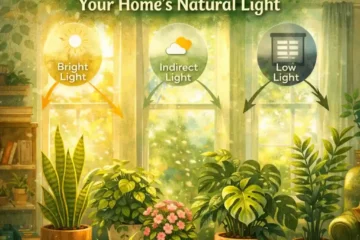
When caring for indoor plants, I always recommend matching your plant to your window orientation. North-facing windows are best for low-light plants, while south-facing windows suit plants that need strong, direct sun.
Decoding Nutrient Deficiencies: Why Location Matters
Sometimes, yellow leaves are a sign of “hidden hunger”. Based on my research into plant physiology, the location of the yellowing is a major clue because some nutrients are “mobile” and others are “immobile”.
Mobile Nutrients: Yellowing on Older Leaves
If a plant is missing a “mobile” nutrient, it will actually pull that resource from its older, lower leaves to support new growth.
Nitrogen (N) Deficiency
This is the most common deficiency. It typically causes a general yellowing (chlorosis) starting at the base of the plant.
Magnesium (Mg) Deficiency
This causes “interveinal chlorosis,” which is just a fancy way of saying the area between the leaf veins turns yellow while the veins stay green. This also shows up on older leaves first.
Immobile Nutrients: Yellowing on Younger Leaves
If the missing nutrient is “immobile,” the plant can’t move it, so the symptoms show up on the newest leaves at the top.
Iron (Fe) Deficiency
Similar to magnesium, this causes yellowing between the veins, but it appears on young leaves first. It is often caused by soil that is too alkaline, which makes the iron “insoluble” and hard for roots to grab.
Calcium (Ca) Deficiency
This can cause young leaves to look distorted or develop “hooked” tips.
For indoor plant care, using a 10-10-10 balanced fertilizer during the growing season (spring and summer) is usually the best way to prevent these issues.
Managing Humidity and the Trouble with Tap Water
If you see brown tips on your foliage plants, the air in your home might simply be too dry. Most tropical plants thrive in 50–70% humidity, but our homes can drop to 30% during the winter heating season.
The Tap Water Issue
Some sensitive plants, like Calatheas or Spider Plants, can be picky about the minerals in tap water. Salts, chlorine, or fluoride build-up can lead to those pesky brown tips.
Expert Tips for Humidity
Try using a room humidifier, grouping your plants together to create a “moisture bubble,” or placing them on a pebble tray filled with water. If you suspect tap water is the problem, switching to distilled or filtered water can make a huge difference.
Spotting and Treating Common Indoor Plant Pests Naturally
Pests can also be the hidden cause behind yellow leaves. Based on plant care studies, here are the ones I’ve found to be the most common:
Spider Mites
Look for very fine webbing and tiny yellow speckles on the leaves.
Mealybugs
These look like small, white, cottony clumps usually hiding in the nooks where the leaf meets the stem.
Fungus Gnats
These are the tiny black flies you see buzzing around the soil; they thrive in overwatered, damp conditions.
Treating Pests Naturally
From what I’ve gathered through experience, wiping the leaves with neem oil or a gentle insecticidal soap is a great way to handle these “uninvited guests” without harsh chemicals. For fungus gnats, simply letting the soil dry out more between waterings can break their life cycle.
Your Step-by-Step Houseplant Rescue Plan
Once you’ve diagnosed the issue, it’s time for some practical plant care tips to nurse your green friend back to health.
1. Pruning Damaged Foliage
You might wonder, “Should I cut the brown tips off my plant?” Generally, the answer is yes.
- Why Prune? Removing dead or yellowing leaves isn’t just about looks; it prevents the spread of diseases like Botrytis (grey mould) and allows the plant to focus its energy on healthy growth.
- How to Prune: Always use sharp, clean scissors. Cut just above a leaf node (the bump where a new leaf might grow). If you’re just trimming a brown tip, leave a tiny sliver of brown behind so you don’t cut into the “living” green tissue, which can cause further stress.
2. Adjusting the Routine
If the problem was light, move the plant—but do it gradually to avoid plant shock. If the issue was watering, change your frequency based on the finger test rather than a strict calendar schedule.
3. Repotting for Growth
If you see roots poking out of the bottom of the pot, your plant might be “rootbound” and unable to get enough water or nutrients.
- Pro Tip: When moving to a new home, only choose a pot that is 1 to 2 inches larger in diameter than the current one. A pot that is too large will hold too much water and lead right back to the risk of root rot.
- Handling the Roots: Before putting the plant in its new pot, gently “massage” or loosen the root ball to help it branch out into the new soil.
Finding the Best Indoor Plants for Beginners
If you find you’re struggling with more delicate species, I recommend starting with easy care indoor plants that are naturally more resilient. Based on botanical research, these “unkillable” favorites are great for learning the ropes:
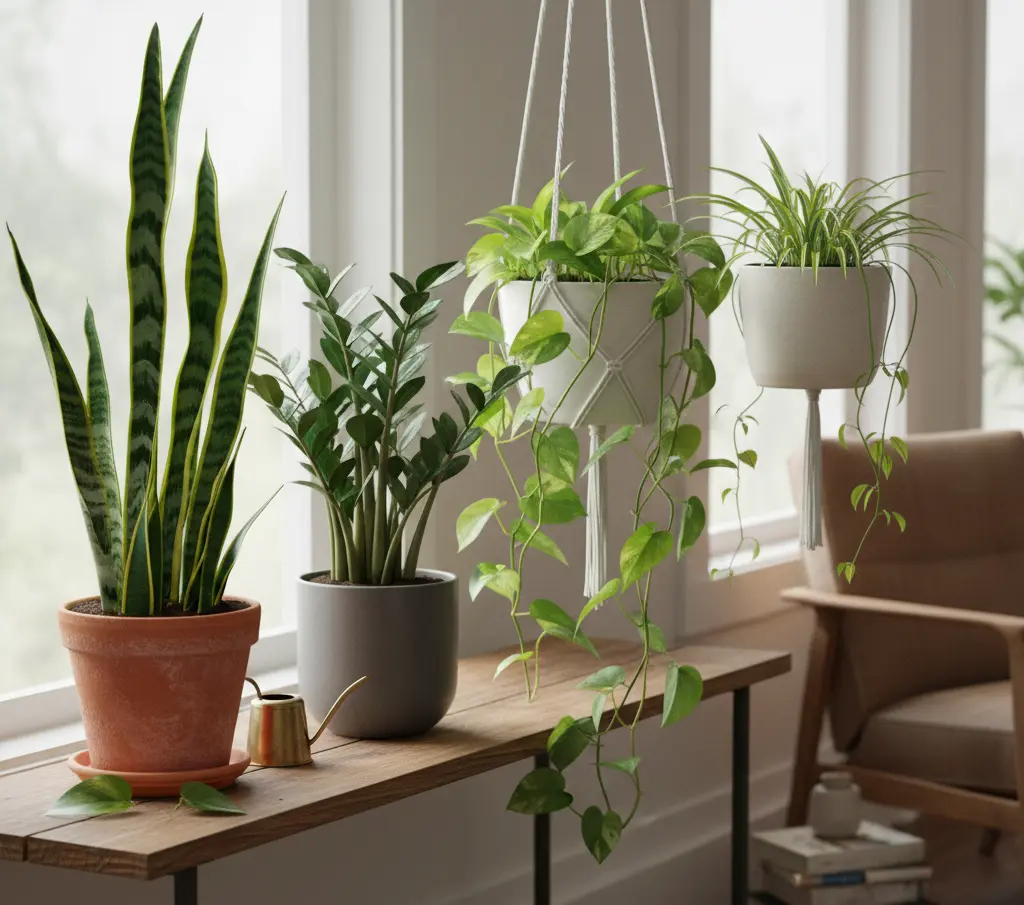
- Snake Plant (Sansevieria): One of the best indoor plants for beginners because it can handle low light and very infrequent watering.
- ZZ Plant (Zamioculcas zamiifolia): This plant has underground rhizomes that act like water storage tanks, making it very drought-tolerant.
- Pothos (Epipremnum aureum): Very forgiving of different light levels and easy to propagate from a simple cutting
- Spider Plant (Chlorophytum comosum): A non-toxic choice that is safe for pets and kids.
For those looking for something unique, the Beaucarnea recurvata indoor plant (Ponytail Palm) is a fantastic, slow-growing option that stores water in its trunk. If you want a more “jungle” look, the Monstera deliciosa is iconic, though it does need a bit more space and bright, indirect light.
Frequently Asked Questions
What are the 5 basic needs of a plant?
Based on plant care studies, every plant needs:
- Light (for energy)
- Water (for transport)
- Air (oxygen for roots and CO2 for leaves)
- Nutrients (for growth)
- Space to grow
Does adding sugar to water help plants?
While sugar is produced by plants through photosynthesis, adding it to the soil is generally not recommended for indoor plant care as it can encourage the growth of harmful bacteria and fungi in the pot.
Should I mist indoor plants in winter?
Misting can help boost humidity temporarily, but it’s not a replacement for a humidifier. Be careful not to mist plants with “fuzzy” leaves, as trapped water can lead to rot or disease.
What do I do with dead leaves on plants?
It is best to remove them! Leaving decaying leaves on the plant or sitting on the soil can attract pests and diseases like Botrytis.
A Final Word of Encouragement
Remember, the most important part of any indoor plant care is simply to observe and learn. What are signs of unhealthy plant growth? Look for yellowing, wilting, or etiolation. But don’t let a few yellow leaves discourage you. Even the most successful plant parents have lost plants along the way—it’s just how we learn the “language” of our leafy friends. Gardening is as much an art as it is a science, and every small adjustment you make brings you one step closer to a thriving indoor forest.
Happy planting🌱